
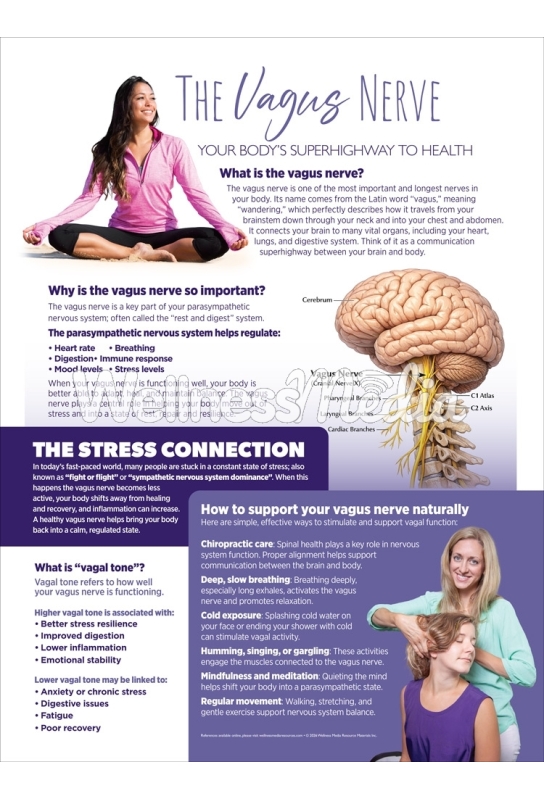

This 18" x 24" outlines the role of the Vagus nerve in regulating our nervous system. The differences between sympathetic and parasympathetic tone are discussed, along with strategies to support vagal function in the nervous system.

Privacy Policy

Shipping and Return Policy
Poster Text:
The Vagus Nerve: Your Body's Superhighway to Health
What is the vagus nerve?
The vagus nerve is one of the most important and longest nerves in your body. Its name comes from the Latin word “vagus,” meaning “wandering,” which perfectly describes how it travels from your brainstem down through your neck and into your chest and abdomen.
It connects your brain to many vital organs, including your heart, lungs, and digestive system. Think of it as a communication superhighway between your brain and body.
Why is the vagus nerve so important?
The vagus nerve is a key part of your parasympathetic nervous system; often called the “rest and digest” system.
The parasympathetic nervous system helps regulate:
· Heart rate
· Breathing
· Digestion
· Immune response
· Mood and stress levels
When your vagus nerve is functioning well, your body is better able to adapt, heal, and maintain balance. The vagus nerve plays a central role in helping your body move out of stress and into a state of rest, repair and resilience.
The stress connection
In today’s fast-paced world, many people are stuck in a constant state of stress; also known as “fight or flight” or “sympathetic nervous system dominance”. When this happens the vagus nerve becomes less active, your body shifts away from healing and recovery, and inflammation can increase. A healthy vagus nerve helps bring your body back into a calm, regulated state.
What is “vagal tone”?
Vagal tone refers to how well your vagus nerve is functioning.
Higher vagal tone is associated with:
· Better stress resilience
· Improved digestion
· Lower inflammation
· Emotional stability
Lower vagal tone may be linked to:
· Anxiety or chronic stress
· Digestive issues
· Fatigue
· Poor recovery
Signs your vagus nerve may need support
· Feeling constantly stressed or “on edge”
· Poor digestion or bloating
· Shallow breathing
· Trouble relaxing or sleeping
· Frequent illness or slow recovery
How to support your vagus nerve naturally
Here are simple, effective ways to stimulate and support vagal function:
Chiropractic care
Spinal health plays a key role in nervous system function. Proper alignment helps support communication between the brain and body.
Deep, slow breathing
Breathing deeply, especially long exhales, activates the vagus nerve and promotes relaxation.
Cold exposure
Splashing cold water on your face or ending your shower with cold can stimulate vagal activity.
Humming, singing, or gargling
These activities engage the muscles connected to the vagus nerve.
Mindfulness and meditation
Quieting the mind helps shift your body into a parasympathetic state.
Regular movement
Walking, stretching, and gentle exercise support nervous system balance.
This 18" x 24" outlines the role of the Vagus nerve in regulating our nervous system. The differences between sympathetic and parasympathetic tone are discussed, along with strategies to support vagal function in the nervous system.