
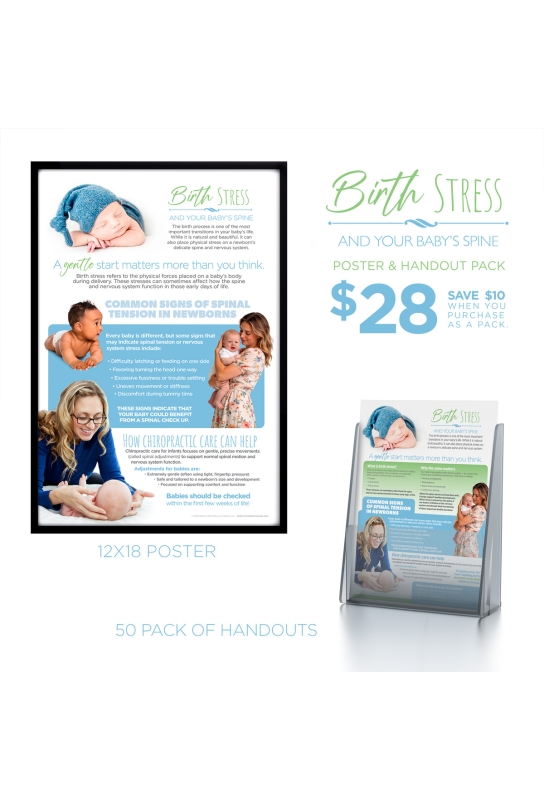

This product package features our birth stress handout and 12" x 18" poster together in a convenient bundle, perfect for educating your patient base on the important role Chiropractic can play for newborns!
Save $10.00 USD compared to buying these products individually.
Browse the products individually:

Privacy Policy

Shipping and Return Policy
Poster and Handout Text:
A gentle start matters more than you think
The birth process is one of the most important transitions in your baby’s life. While it is natural and beautiful, it can also place physical stress on a newborn’s delicate spine and nervous system.
What is birth stress?
Birth stress refers to the physical forces placed on a baby’s body during delivery. Even in smooth, uncomplicated births, a baby’s head and neck can experience:
These stresses can sometimes affect how the spine and nervous system function in those early days of life.
Why the spine matters
Your baby’s spine protects the nervous system — the system that controls and coordinates everything in their body, including:
When the spine moves and functions well, it helps support healthy development. When stress is placed on the spine, it can lead to irritation of the nervous system and disrupt ideal functioning of these important bodily functions.
Common signs of spinal tension in newborns
Every baby is different, but some signs that may indicate spinal tension or nervous system stress include:
These signs indicate that your baby could benefit from a spinal check up.
How chiropractic care can help
Chiropractic care for infants focuses on gentle, precise movements (called spinal adjustments) to support normal spinal motion and nervous system function.
Adjustments for babies are:
The goal is not to “fix” or “cure” anything, but to help your baby’s body adapt and function at its best.
When should my baby be checked?
Many parents choose to have their baby checked:
This product package features our birth stress handout and 12" x 18" poster together in a convenient bundle, perfect for educating your patient base on the important role Chiropractic can play for newborns!
Save $10.00 USD compared to buying these products individually.
Browse the products individually: